In 2026, China's short-drama industry is experiencing a profound structural transformation. Driven by the explosive growth of AI technology and the comprehensive implementation of regulatory policies, the industry has completely abandoned its early era of relying on vulgarity, borderline content, and anxiety-inducing plots to grab eyeballs. It has officially shifted its focus from "scale dividends" to "value dividends."
"Dual-Track" Coexistence: The Breakout Battle for Live-Action Short Dramas Amidst AI DisruptionIn the first quarter of 2026, approximately 128,000 micro-dramas were released industry-wide, with AI-generated short dramas accounting for over 95%. Relying on extremely low costs and rapid production cycles, AI short dramas quickly filled the demand in the lower-tier market. However, this "industrialized mass production" has also triggered severe homogenization and aesthetic fatigue.
Concurrently, live-action short dramas have encountered unprecedented "coldness." As platforms canceled indiscriminate guaranteed-fund mechanisms and raised entry barriers, many small and medium-sized production companies relying on代工 (contract manufacturing) models faced the risk of broken capital chains. Even some top-tier actors have found themselves in the predicament of "canceled projects and no work available." Changes in industry rules are forcing practitioners to abandon the old dream of "competing on volume" and refocus on the content itself. As the industry consensus goes: AI short dramas and live-action short dramas are more like two different categories of goods in a supermarket. Live-action short dramas must leverage the advantages of collaborative creation by excellent directors, actors, and production teams to pursue a true path of premium quality.
Policy and Capital Backing: Cultivating Realistic Themes and Building Long-Tail IPsDuring this painful transition period, dual support from policies and platforms has injected a strong dose of confidence into premium live-action short dramas. In May, the National Radio and Television Administration (NRTA) launched the "Premium Micro-Drama Creation and Distribution Initiative," setting a clear target of cultivating thousands of premium works throughout the year to promote "standardization and quality enhancement" in the industry.
Capital has also shifted toward precision irrigation. Douyin Group announced a special 500 million RMB fund to support live-action short dramas, while Hongguo (Red Fruit) Short Drama released its "Thousand-Film Plan," committing to support no fewer than 1,000 realistic-themed live-action micro-dramas this year, with a maximum special fund of 200,000 RMB per project. Under policy guidance, realistic works focusing on the struggles of ordinary people and showcasing societal changes, such as Heading North and Home Bound by Love, have stood out, proving that "audiences will always pay for sincere content." Meanwhile, the industry is advancing from "one-off viral hits" to "serialized IPs," extending the lifecycle of works and increasing long-tail revenue-sharing returns by giving characters and world-building profound vitality.
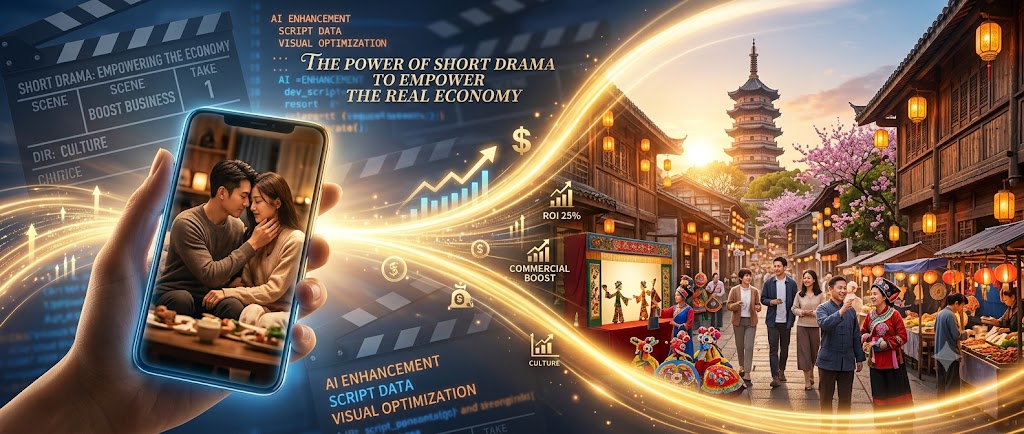
Cross-Industry Breakouts: "One Drama Igniting a City" Becomes a New EngineThe long-term development of the short-drama industry relies on the ecological layout of business models. Currently, the "Short Drama +" model is becoming a new fulcrum for boosting consumption. Regions like Zhejiang and Guangxi have successively introduced new policies to promote the concept of "one drama igniting a city." For example, the Zhejiang-produced short drama The Fendela of Midsummer drove a 45.8% surge in foot traffic to its filming locations, while The Worldly Warmth of the Lijiang Fairy successfully converted online traffic into offline cultural tourism heat in Guilin.
From "Short Drama + Cultural Tourism," "Short Drama + Agricultural Assistance," to "Short Drama + Legal Education," premium short dramas are using their unique narrative charm to become the greatest common denominator connecting audiences, brands, and industries. Through matrix-based operations, core users are being radiated to potential users, enabling the short-drama industry to achieve a profound transformation from content prosperity to industrial win-win outcomes.
Standing at the new starting point of 2026, although the short-drama industry has experienced the pain of squeezing out the bubble, what remains after the大浪淘沙 (sifting out the gold from the sand) will be creators who truly understand creation and revere content. A more standardized, diverse, and culturally valuable new short-drama ecosystem has already unfurled.